- Phone/WhatsApp: 0612239551

Ready to trade the cityscape for the swell? If you’re looking to learn to surf in Cape Town, your journey begins right here on the spectacular shores of Big Bay with Atlantic Surf Co.
Taking the plunge can feel a little daunting, but our structured, safe, and fun beginner surf lesson is designed to take you from total novice to confident wave-rider in a single session. We’ve broken our lesson down into 7 simple steps. Here is your roadmap to standing up on your very first wave!
Before we hit the Atlantic, we ensure you have the essential knowledge for a fun and safe experience.
This foundational segment is crucial and covers three main areas:
We also use this time for a brief introduction and to set clear expectations for what you’ll be covering over the next 90 minutes.
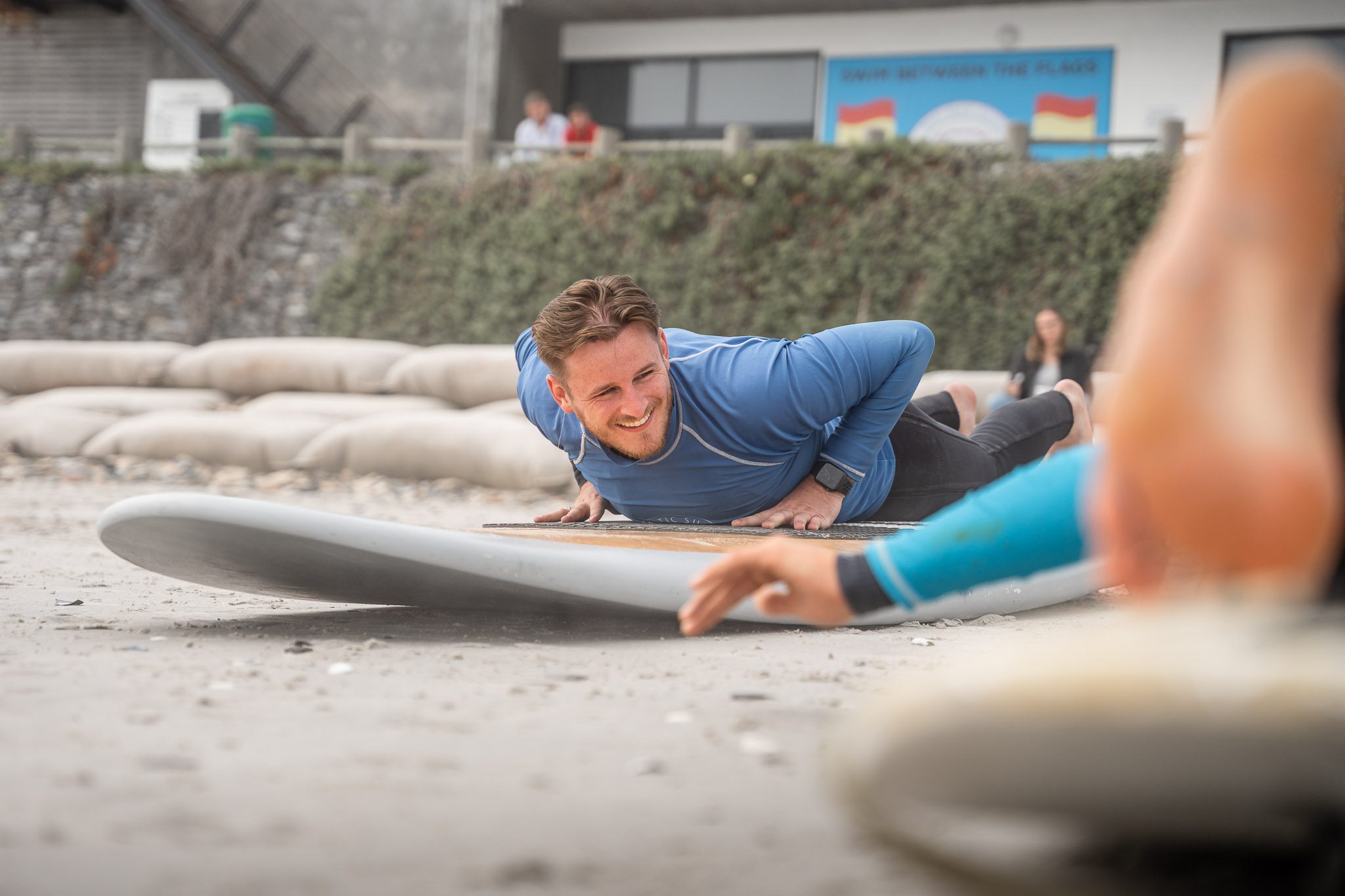
The pop-up—that quick, smooth move from lying to standing—is the most important skill you’ll learn. We dedicate ample time to practicing it on the safety of the sand.
Your coach will provide a pop up on land demonstration, followed by intensive practice, corrections and alterations if needed. We won’t let you near the water until you can nail a fluid, safe pop-up.
Pro-Tip for Slower Learners: Don’t worry about mastering it instantly. For those who need a bit more time, your coach will provide more attention and tips… to the pop up, ensuring you build the right muscle memory from the start.
This is where the excitement begins! We head into the shallow white water.
To ensure your first waves are successful, your coach will take the lead:
Your only job here is to focus on the feeling of the wave pushing you forward.
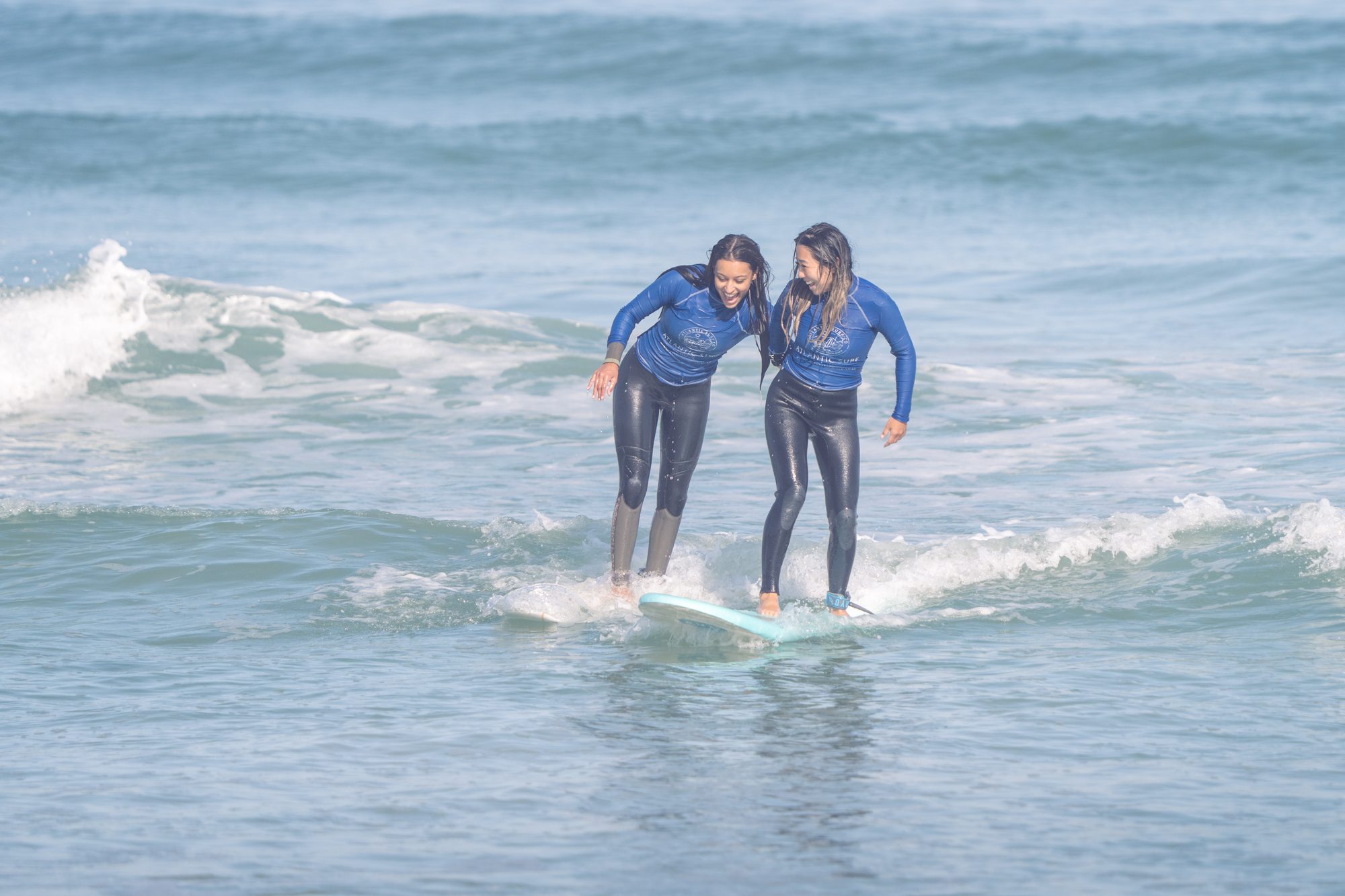
The pressure is off, and the fun is on! For your first 3-5 waves, your focus is simply attempting the pop-up technique you mastered on the sand.
Your coach remains right next to you, giving correction as per mistakes immediately after each attempt. This instant feedback loop is what makes a professional surf school Cape Town like ours so effective, helping you quickly identify and fix errors.
Once you’ve had a few attempts at standing, we add the next layer of complexity: paddling.
You’re now fully independent! By this stage, you are capable of solo board handling in the water and white water wave selection.
The goal of this final part of the beginner surf lesson cape town is to be able to leave the student to choose a wave, catch, stand up and ride by themselves. This feeling of catching and riding a wave entirely on your own is what we call “pure stoke,” and it’s what we strive for with every student.
Did you nail the pop-up and white water riding early? Congratulations! We’ll immediately move you on to the next skill: turning.
For fast learners, turning is often covered, with a focus on a simple but revolutionary concept: the use of the eyes. We’ll teach you that your board follows your head, and where you look is where you go, allowing you to control the direction of your ride.
–> Learn more about our packages
Tip: If you’re nervous, go private first to nail the basics. If you’re booking a birthday or team event, ask about Kids Parties or Team/Group sessions—we’ll handle the logistics. Atlantic Surf


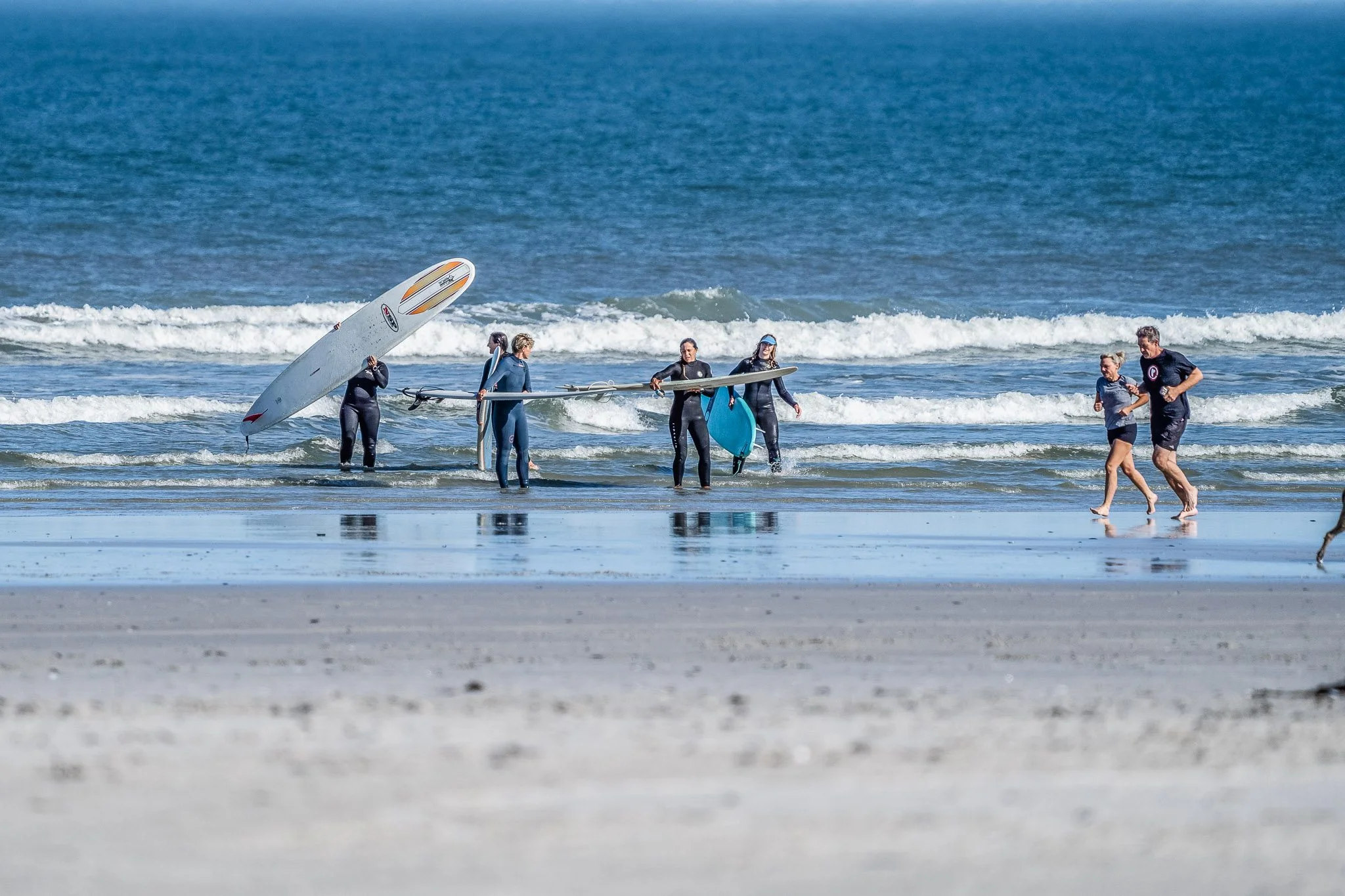
Whether you need a little extra attention on the pop-up or you’re a natural ready to start turning, our coaches at Atlantic Surf Co. are ready to customize the experience to your pace. Big Bay offers one of the most beautiful and user-friendly environments to learn to surf in Cape Town.
Book your Beginner Surf Lesson Cape Town today and feel the thrill of riding your first wave!
A: You do not need to be an Olympic swimmer, but you must be comfortable in the ocean and able to swim short distances. Our beginner lessons take place in the white water area, which is shallow and close to the shore. Your coach will be with you the entire time for safety and assistance.
A: The Atlantic Ocean side, where Big Bay is located, can be chilly! For your comfort and safety, a high-quality wetsuit is included with your surf lesson (or available for rental). We provide thick, warm wetsuits (4/3mm) specifically suited for the Cape Town water temperature.
A: We offer lessons for all ages! Our general minimum age for group lessons is 8 years old, but we can accommodate younger children with a private lesson focused on shallow-water fun and safety. It’s never too late to start!
A: While Muizenberg is very well-known, Big Bay offers a fantastic, user-friendly environment with the iconic backdrop of Table Mountain. For absolute beginners, both spots work well, but many students find Big Bay offers slightly more open and consistent waves, which is great for the solo paddling and standing up we focus on in our lessons.
A: All you need is swimwear, a towel, sunscreen, and a bottle of water! We provide the surfboard, leash, and a warm wetsuit. We also have on-site facilities if you need a place to change.

User’s comment history with a profile card on the right side.
User’s comment history with a profile card on the right side.
User’s comment history with a profile card on the right side.
User’s comment history with a profile card on the right side.
budget-friendly, ~5:1 surfer-to-coach, matched with similar levels.
book 4 lessons and build momentum at a better rate.
just you (or you + friends/family), full attention.
4-lesson bundles for focused progress. Prices are listed on our Surf Lessons page with quick WhatsApp booking.
Tip: If you’re nervous, go private first to nail the basics. If you’re booking a birthday or team event, ask about Kids Parties or Team/Group sessions—we’ll handle the logistics.
Need gear outside lessons? We do surfboard & wetsuit rentals (2-hour, 4-hour, daily, multi-day), from beginner soft-tops through to more advanced shapes—perfect for practice days.
Ready to try surfing at Big Bay with a local crew that keeps it safe and fun?


PAYMENTS ARE INTEREST-FREE WITH NO DEPOSIT REQUIRED. #CHOOSEHAPPY
Add items to your cart.
Choose
at checkout.
Enter your payment details & payday.
Your first payment (50%) is made on your first payday post-purchase and the second payment (50%) is made on your next payday thereafter.